- January 17, 2026
- 4 Mins Read
10 Questions Worth Asking Before You Start an Extension
An extension can transform how your home works, but the best projects usually begin long before the first drawing is produced. Understanding what is possible, what is worth spending money on and what constraints may affect the design can save significant time and expense later.
If you’re considering extending your home in Ilford, Redbridge or across East London, these are ten questions worth asking before you get started.
1. What Am I Actually Trying to Improve?
Start with the problem rather than the extension itself.
Is the kitchen too small? Do you need better connection to the garden? Are you short of natural light, storage or usable living space?
A clear understanding of what isn’t working will help determine whether an extension is actually the right solution.
2. How Much Space Do I Really Need?
More space isn’t always better space.
Think carefully about how you use each room and how the new space will connect with the existing house. A well-designed extension can make a relatively modest increase in floor area feel significantly larger and more useful.
3. Is an Extension Possible on My Property?
Every house has different constraints.
The size and shape of your garden, neighbouring properties, existing extensions, access, drainage, trees and the relationship with the street can all influence what is realistically achievable.
A site appraisal at an early stage can help establish the possibilities before you commit to a design.
4. Will I Need Planning Permission?
Some extensions may be possible under permitted development rights, while others will require planning permission.
The answer depends on the property, its location, the scale of the proposal and the nature of the works. Conservation areas, listed buildings and other planning constraints can also affect what is possible.
It is worth establishing this early rather than assuming your project will automatically qualify.
5. What Will the Existing House Allow?
Older homes often come with their own set of constraints.
Party walls, chimney breasts, existing foundations, drainage runs, roof structures and previous alterations can all affect the design.
Understanding the existing building properly before designing around it can prevent expensive surprises later.
6. How Will the Extension Affect Natural Light?
Adding floor area should not mean sacrificing the quality of the space.
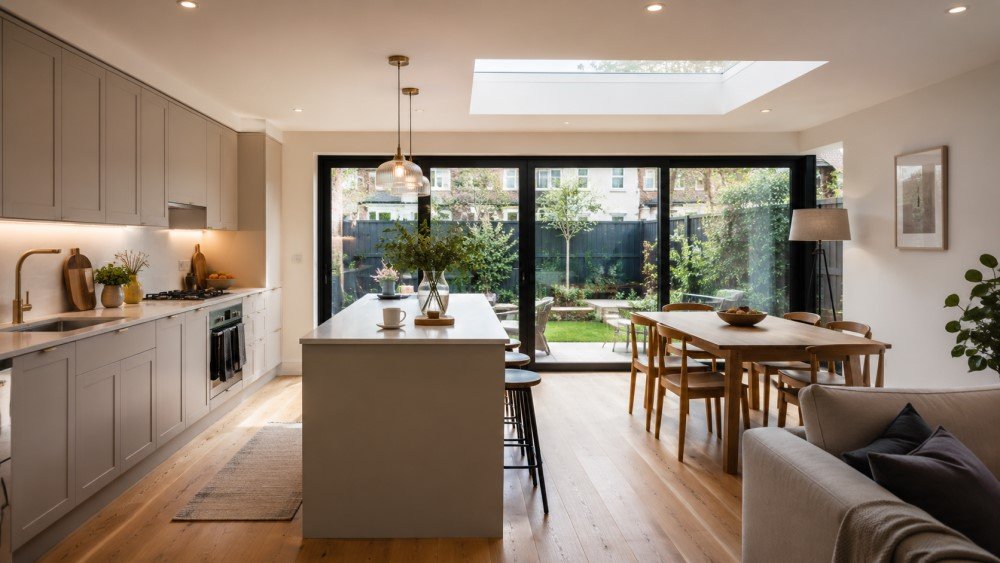
Consider where the sunlight comes from, how the extension will affect existing rooms and where new windows, rooflights or glazed doors could bring light into the house.
The best extensions often use light as a design tool rather than simply adding more glazing.
7. How Will It Connect to the Existing House?
A successful extension should feel like part of the home rather than an additional room attached to it.
Changes in floor levels, ceiling heights, materials, openings and circulation all affect how naturally the old and new spaces work together.
The connection between the existing house and the extension is often just as important as the extension itself.
8. What Is My Realistic Budget?
Establish a realistic budget before the design becomes too advanced.
Remember to consider not only construction costs, but also professional fees, surveys, planning or building control costs, structural engineering and a contingency for unexpected work.
A clear budget allows the design to respond to what you can realistically afford.
9. How Will We Live Through the Work?
Construction can significantly affect how you use your home.
Think about access, kitchen facilities, dust, noise, storage and whether you will need to move out temporarily. Understanding the likely disruption early can make the construction phase much easier to manage.
10. Who Should I Speak to Before Starting?
The earlier you get the right advice, the fewer assumptions you have to make.
An architect or architectural designer can help you understand the potential of the property, identify constraints, explore design options and establish the likely planning and construction route before you commit to major decisions.
Start With the House, Not the Extension
The strongest extension projects begin with an understanding of the existing home.
Before thinking about how much you can add, consider what the house needs, what the site allows and how the new space can improve the way you already live.
If you’re considering an extension in Ilford, Redbridge or across East London, get in touch with Design Time Architecture to discuss your property and what may be realistically achievable.